
With the Strait Closed, Aviation Is Rewriting Its Economics from the Ground Up

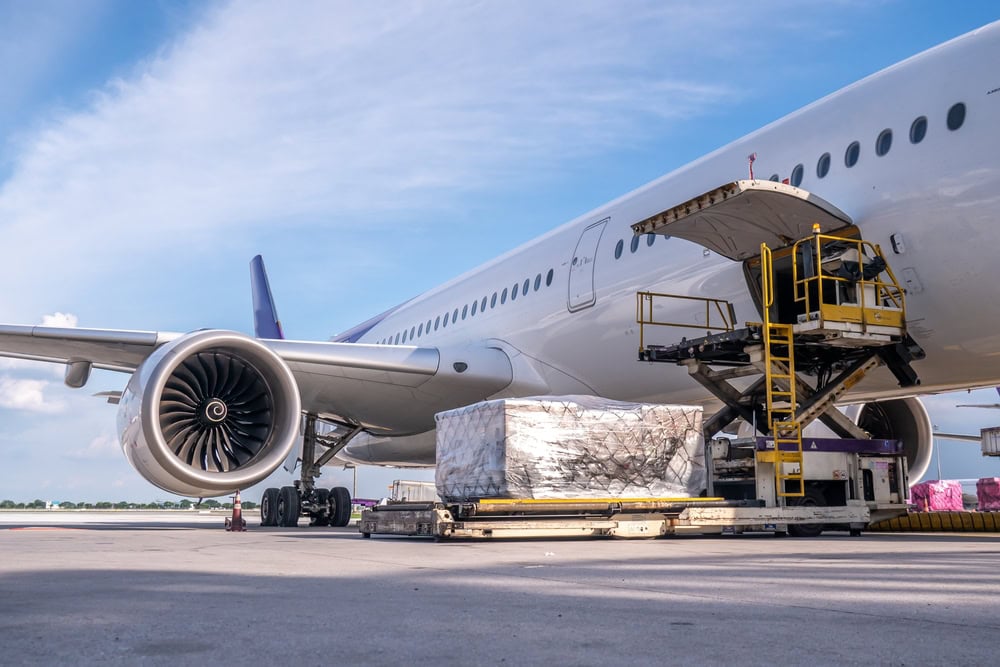
When the Strait of Hormuz closed, the effects on container shipping and trucking were immediate and well-documented, but the disruption to global aviation has been equally severe and, in several respects, more structurally consequential, because the aviation industry does not just move cargo through the region; it moves through the region itself, and the airspace above the Gulf has been central to how the world’s most important hub-and-spoke networks were built.
The numbers from Cassel Salpeter’s Q1 2026 Aviation Investment Banking Update are significant. Jet fuel prices more than doubled in some regions, reaching as high as $230 per barrel in Singapore in early March, as the Strait’s effective closure choked off roughly 20 percent of global oil supplies and the refined fuel products that account for approximately half of Europe’s jet fuel imports. Oil prices climbed above $100 per barrel in April, and airlines throughout the world are now absorbing billions in additional fuel costs, passing as much of that burden as possible to consumers through surcharges and fare increases of 15 to 35 percent on key international routes. Major listed airlines lost an estimated $53 billion in market value between February and the end of Q1.
The operational damage has been equally disruptive. Between late February and mid-April, more than 52,000 flights to and from the Middle East were canceled, and at the peak of the disruption in March, over 4,000 daily flights were grounded, leaving hundreds of thousands of passengers stranded. Key airspaces across Iran, Iraq, Kuwait, Bahrain, and the UAE have been largely closed to commercial traffic, forcing aircraft onto narrow corridors over Georgia, Azerbaijan, and Central Asia that add up to three hours to journey times and significantly increase fuel burn per flight.
The hub paralysis may be the most structurally significant development of all. Dubai, Doha, and Abu Dhabi collectively handle roughly 15 percent of global air traffic, and all three have seen operations suspended or drastically reduced. The Gulf carrier model, built over two decades on the premise that a geographically central, politically neutral hub could capture transit traffic between East and West, is under direct threat, and the carriers most exposed, Emirates, Qatar Airways, and Etihad, have been operating at 40 to 60 percent of normal capacity since the conflict began.
Western carriers are moving quickly to capture the displaced demand. Lufthansa, British Airways, and Air France-KLM have redeployed widebody jets to India and Southeast Asia, and airports in China and India are gaining market share as alternative transit points for passengers who previously connected through the Gulf. The insurance market is hardening in parallel, with premium adjustments and heightened underwriting scrutiny for operations near conflict zones accelerating a cost increase that compounds the fuel shock for carriers already under margin pressure.
Not every segment is suffering equally, and the Cassel Salpeter analysis identifies a clear competitive division emerging from the disruption. The carriers best positioned to weather the current environment share three characteristics: an attractive fuel strategy through hedging or refinery access, a premium or luxury cabin focus that gives them pricing power with less cost-sensitive travelers, and a route network that is not heavily dependent on long-haul connections through Middle Eastern hubs. Delta Air Lines, which owns its own refinery and draws a disproportionate share of revenue from premium cabins, has a structural hedge that its peers largely lack. European low-cost carriers flying short intra-European routes are similarly insulated. The carriers caught in the middle, long-haul operators without fuel hedging and meaningful Gulf exposure, are absorbing the full weight of the disruption simultaneously.
The M&A market has not paused in the face of that disruption, and the deal activity documented in Cassel Salpeter’s Q1 review suggests that strategic buyers and private equity are actively repositioning around the new competitive reality. TransDigm’s $2.2 billion acquisition of Victor Sierra Aviation Holdings, VSE Corporation’s $2.18 billion deal for Precision Aviation Group, and Blackstone’s $1.45 billion take-private of TriMas Aerospace all closed or were announced in Q1, reflecting continued conviction in the MRO and parts supply chain even as airline economics are being stress-tested. Private placement activity tells a similar story, with Shield AI raising $2.25 billion in a Series G round and Saronic Technologies closing $1.75 billion in Series D financing, as defense-adjacent aerospace investment accelerates in an environment where geopolitical risk has become the defining variable.
Whether the Strait reopens in weeks or remains a structural constraint for months, the Cassel Salpeter analysis frames the uncertainty clearly: the question for aviation is not whether this shock is severe, it demonstrably is, but whether it proves temporary or marks the beginning of a lasting geographic reordering of how global air traffic flows. The answer depends on how long the conflict runs, and that is a variable no balance sheet can fully hedge.