
What the Strait of Hormuz Is Doing to Your Supply Chain Right Now

The conflict in the Middle East is no longer a geopolitical abstraction for freight professionals. It is showing up in fuel surcharges, spot rate movements, rerouted ocean lanes, and broker margins. Supply Chain Moves gathered perspectives from three practitioners working close to the operational edge of this disruption: a global logistics CEO, a freight technology founder, and a domestic trucking sales leader. What follows is what they see moving, and what it means for shippers and service providers trying to hold their networks together.
Eran Tamir, Global CEO of ICL Global, has watched the current disruption compound across multiple freight modes simultaneously, a pattern he says distinguishes this moment from prior episodes of regional instability.
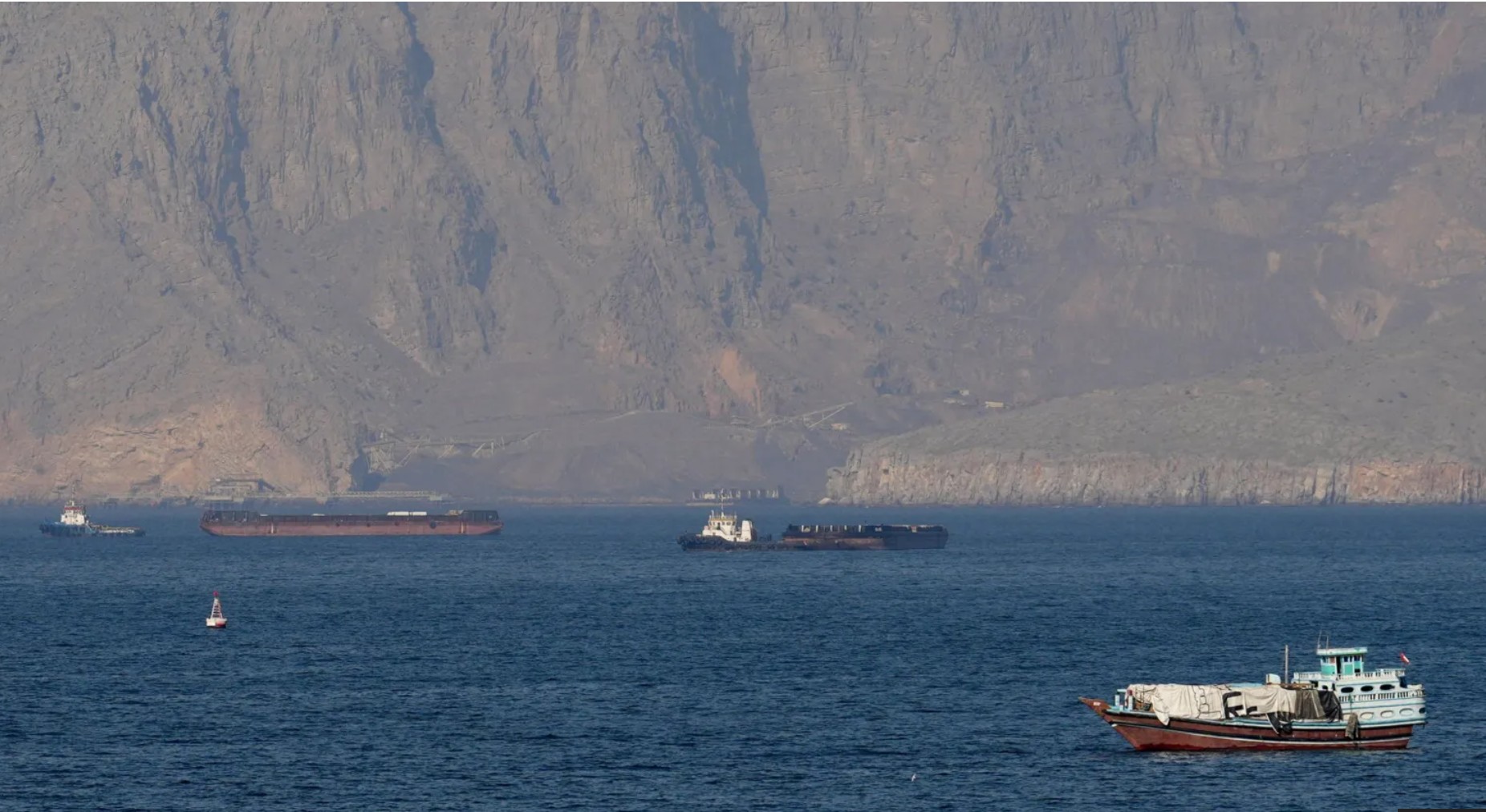
Heightened risk in the Strait of Hormuz and the Bab el-Mandeb Strait is forcing adjustments in both air and ocean freight. Airlines are rerouting flights to avoid high-risk airspace, extending transit times and driving up fuel burn. Ocean carriers are diverting vessels via the Cape of Good Hope, adding approximately 10 to 14 days to transit and raising operational costs across the board.
Oil prices are sustaining pressure around or above USD 100 per barrel, and the effect on trucking is direct. Fuel remains the largest cost component in domestic transportation, and the math translates quickly into higher fuel surcharges and linehaul rate increases.
Tamir also points to a secondary pressure that tends to get less attention: the repositioning effect. Supply chain adjustments and inventory realignment are placing additional demand on trucking capacity at the same moment that regional hubs in Dubai, Abu Dhabi, Doha, and Tel Aviv are experiencing operational disruptions. Reduced ocean schedule reliability and port congestion are increasing demand for inland transport flexibility precisely when that flexibility is being squeezed.
“The trend is clear,” Tamir said. “Supply chains are becoming more complex, less predictable, and more costly. Companies that invest in flexibility and real-time visibility will be best positioned to navigate ongoing volatility.”
Ricky Gonzalez, CEO of Tabi Connect, works daily with freight brokers on real-time pricing and market response. His read on the current environment is less about macro dynamics and more about the operational gap that volatility creates between when a broker quotes freight and when that freight actually moves.
“What’s happening in the Strait of Hormuz is something we talk about with brokers all the time,” Gonzalez said, “which is that volatility isn’t really a market condition anymore, it’s just the environment.”
The speed at which macro events transmit into freight constraints is the core issue. Whether the catalyst is an armed conflict, a tariff announcement, or a fuel event, the freight market does not hold still long enough for brokers relying on manual processes to respond. Brokers quoting on yesterday’s data are winning freight on bids that have already moved against them by the time the load ships, a dynamic that erodes margin quietly until it becomes a structural problem.
Gonzalez draws a clear line between the brokers absorbing this volatility and those managing through it. The distinction is not instinct or experience. It is tooling. Brokers with systems that surface actionable market intelligence in real time can adjust fast enough for it to matter. Those without are essentially pricing on a lag in a market that no longer rewards that.
“Fuel used to be something you could update on a schedule and trust it would hold for a few days,” Gonzalez said. “But fuel is really just one piece of a bigger pattern. Every major macroeconomic event, whether a conflict, a tariff announcement, or a sanctions shift, creates an immediate ripple in how freight moves and what it costs.”
Craig Geskey, Director of Sales for Strategic Growth at Traffix, frames the domestic trucking impact less as a rate question and more as a network exposure question, a distinction that matters for how shippers respond.
This conflict is disrupting supply chains by injecting energy volatility into the freight market, raising transportation costs, and reducing network predictability. The downstream effects extend across procurement, inventory planning, and transportation execution as companies react to shifting fuel costs, changing carrier behavior, and less reliable transit flows.
Spot pricing and fuel recovery are the fastest-moving indicators. Contract pricing adjusts more gradually, through surcharge escalations and linehaul revisions, but it follows. The more consequential issue, Geskey argues, is what rapid fuel volatility reveals about a shipper’s network architecture.
“The question is not whether diesel is up or down,” Geskey said. “The question is how exposed your network is when it moves fast.”
Keith Matthews, President and CEO of NAD Logistics, brings a cross-border lens to the fuel efficiency conversation, one that points to an underutilized opportunity hiding in plain sight for U.S. shippers moving freight to and from Canada.
The mechanics are not new. Procter and Gamble pioneered a version of this thinking years ago, structuring their carrier bids to include a section where carriers could identify continuous move opportunities, lanes where a load dovetailed with a carrier’s natural flow back toward their home base. The logic was straightforward: a carrier already positioned to return in a given direction could offer better pricing on freight that helped them do it. 3PLs have long applied a similar principle, actively sourcing backhaul capacity to reduce empty miles and balance carrier networks.
What makes the current moment different, Matthews argues, is the cost of ignoring it. With fuel prices elevated and surcharges compounding across every mode, the empty mile is no longer just an efficiency problem. It is a material expense. And the cross-border market creates a structural backhaul opportunity that many U.S. shippers are not capturing.
Canadian carriers operating in the United States are legally permitted to haul only freight that returns them to Canada. A Canadian trucker deadheading south cannot simply pick up a domestic U.S. load and continue deeper into the country. That constraint, combined with the natural flow of cross-border trade, means that capacity looking for northbound freight is consistently available at backhaul rates for U.S. shippers moving goods toward Canada. Shippers paying headhaul rates on those lanes are leaving savings on the table that the current fuel environment makes increasingly difficult to justify.
“The act of reducing empty miles and creating efficiencies should be an ongoing endeavor,” Matthews said. “It is never more important than during a time where fuel savings is essential.”
Across all three perspectives, a consistent theme emerges: the current Middle East disruption is accelerating a reckoning that was already underway. The freight networks, pricing tools, and carrier relationships that performed adequately in a more stable environment are being tested by a market that now moves faster and punishes latency more severely than it once did.