



The Non-Domiciled CDL Crisis Has Extended the Freight Recession

by Doug Hindman, Chief Executive Officer, Gulf Relay Holdings
The freight recession has lasted longer than it should, with rates staying suppressed further into the cycle than the underlying demand picture warrants and the recovery proving slower and more uneven than most analysts projected. There are several reasons for that, but one has been underappreciated and almost entirely absent from the mainstream conversation: the distortion created by non-domiciled CDL holders operating at the margins of the market.
The supply side of the trucking market has not cleared the way it normally does after a demand correction. Capacity that should have exited has stayed active longer than the economics justify, and understanding why requires an honest look at who is operating that capacity and under what conditions.
Freight markets are self-correcting, but the correction mechanism depends on economic pressure forcing marginal capacity out. When rates fall below the cost of operations, drivers and small carriers exit, supply tightens, and rates recover in a cycle that is painful but functional.
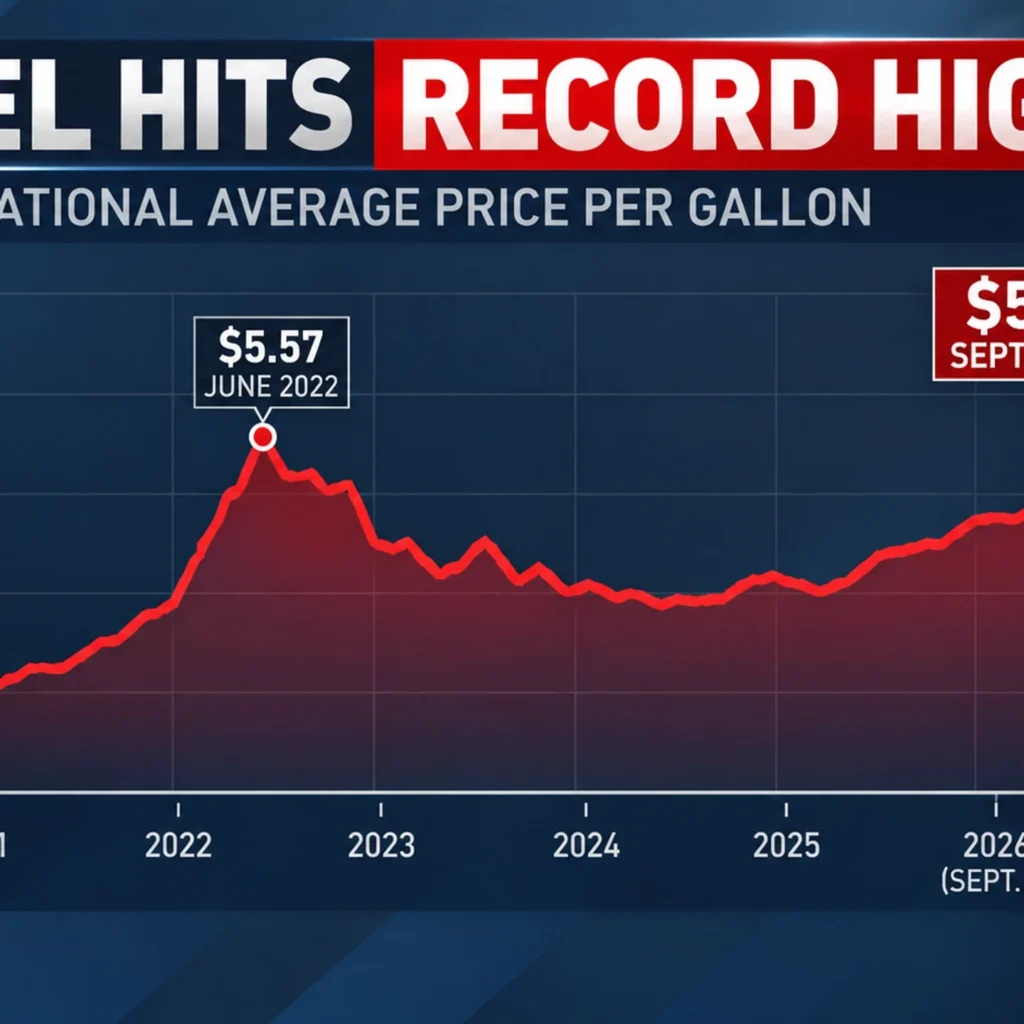
The post-pandemic freight recession followed the demand correction as expected, with volumes normalizing and spot rates collapsing, but the supply-side exit has not happened on schedule. Capacity has remained stubbornly elevated relative to demand, and the industry has kept waiting for a tightening that keeps getting pushed further out.
The Hidden Subsidy of Non-Domiciled Operations
Not all trucking capacity operates under the same cost structure. A compliant U.S.-domiciled carrier carries unavoidable costs: full drug and alcohol testing compliance, medical certification, English language proficiency requirements, and insurance obligations priced to reflect actual risk. Those costs establish a floor below which legitimate operations cannot profitably function.
Non-domiciled operations functioning outside that compliance framework do not share that floor. A driver operating on a CDL issued without proper verification of their driving history, without a legitimate background check, and potentially with insurance that does not reflect their true risk profile has a lower effective cost of operations. They can move freight at rates a fully compliant carrier cannot match and still cover their costs. That is not competition. That is a subsidy created by regulatory failure.
The FMCSA’s nationwide audit made the scale of that failure concrete, with more than half of New York’s non-domiciled CDLs reviewed issued in violation of federal law, California’s noncompliance rate at 25 percent across tens of thousands of licenses, and twenty-eight states and jurisdictions placed under special compliance orders. The licenses in question are not edge cases — they represent a meaningful slice of operating capacity in certain markets and freight lanes.
When capacity operating below true cost stays in the market, it keeps a ceiling on rates that would otherwise rise as demand stabilizes. Brokers and shippers in a competitive spot environment will take the cheapest available truck, and if that truck is cheap because its operator is not carrying the full compliance cost burden of a legitimate carrier, the rate signal that should pull capacity out of the market never arrives clearly enough to accelerate the exit.
This is part of why the freight recession has run longer than the demand fundamentals explain, and why carriers who have maintained their standards have been absorbing margin compression driven in part by competition from capacity that should not be in the market at all. The compliant carrier has been effectively subsidizing the recovery timeline of the non-compliant one.
The FMCSA’s final rule, effective March 16, 2026, eliminates the compliance gap that has made below-cost operations possible at scale, restricting non-domiciled CDL eligibility to holders of H-2A, H-2B, or E-2 nonimmigrant visas, requiring immigration status verification through the federal SAVE system, and aligning CDL expiration dates to lawful presence documentation. Drivers outside those parameters cannot renew when their current license expires, meaning that capacity is in active attrition, moving steadily in one direction as enforcement does what economics alone has not.
Spot rates are beginning to tick upward. The underlying supply correction the market needs is now being accelerated by regulatory action, and for compliant carriers who have absorbed two-plus years of margin compression competing against a distorted market, that shift matters.
What This Means for Carriers and Shippers
Carriers who have maintained full compliance through the downturn are entering the recovery with a driver base that is intact, a compliance record that is clean, and a cost structure that no longer has to compete against operators who were not playing by the same rules.
Gulf Relay has never hired non-domiciled drivers, and we have never adjusted our qualification standards to compete on rate with operators cutting corners on compliance. That discipline has cost us business in the short run, and I will not pretend otherwise. But the carriers who chased headcount at the expense of quality are now navigating roster gaps and re-qualification challenges that we do not have, and when customers who left for cheaper options come back, they are returning to a carrier that never changed what made them reliable in the first place.
For shippers, the implication is direct: the capacity that has been moving your freight at rates that seemed too good to be true was, in some cases, operating in ways that created real liability exposure for your supply chain. That capacity is leaving the market. The question is whether you are building carrier relationships now, or waiting until tightness forces your hand and your options have narrowed.
The market corrects, it always does, and the carriers who held their standards are the ones worth knowing right now.
Doug Hindman is the Chief Executive Officer of Gulf Relay Holdings, a full-service truckload carrier headquartered in Clinton, Mississippi, offering local, regional, national/OTR, dedicated, drayage, and heavy haul transportation services. Gulf Relay is a multi-year SmartWay Excellence Award recipient, a Nissan Top Carrier and the 2026 Supply Chain Moves Carrier of the Year. www.gulfrelay.com