
The Iran War’s Freight Bill: What $5 Diesel Means for Shippers and Carriers

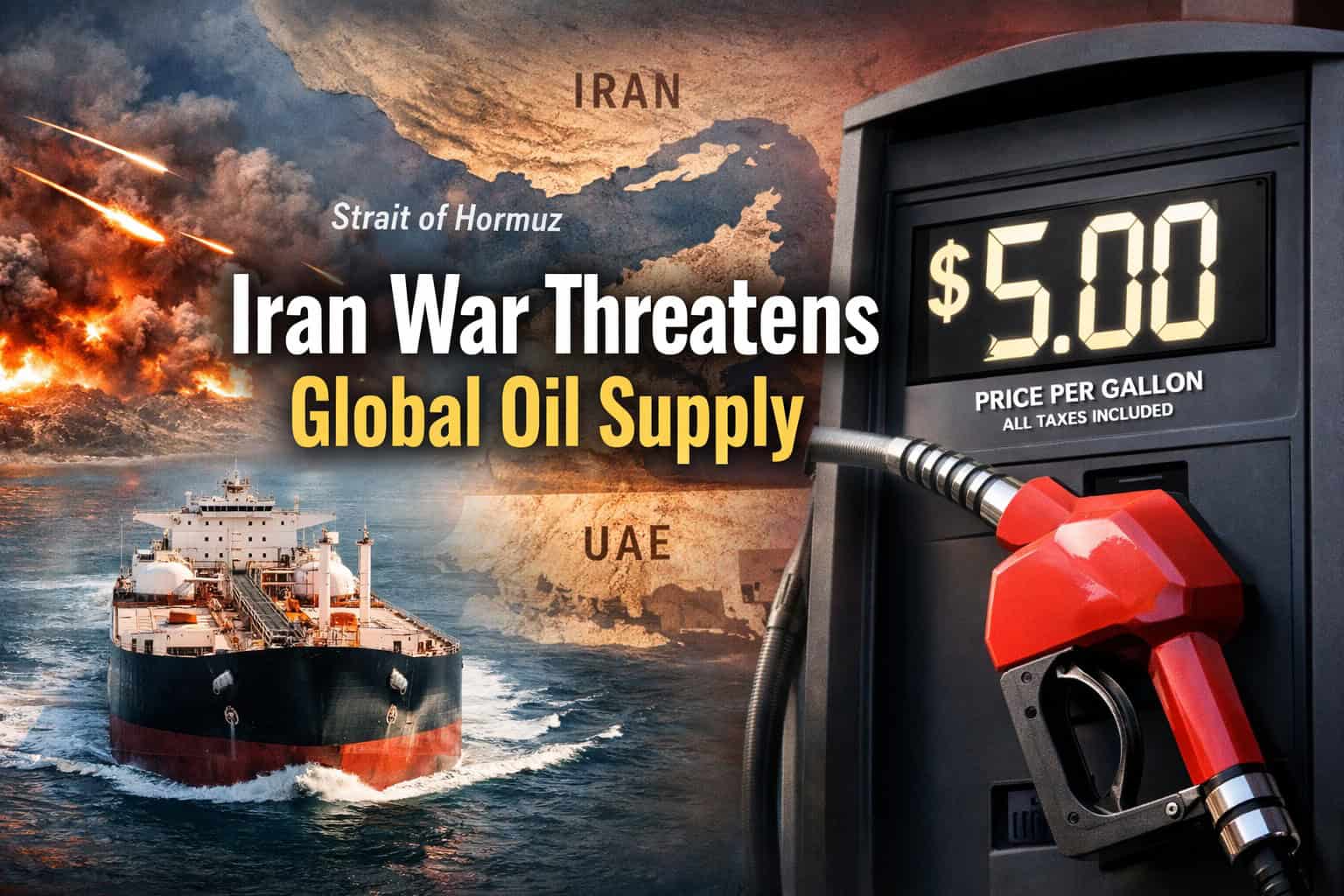
Average diesel prices reached $5.375 per gallon the week of March 24, up from under $4 at the start of the month, as the U.S.-Iran war continues to restrict global petroleum flows through the Strait of Hormuz. The 96-cent single-week surge recorded on March 9 was the largest in the Energy Information Administration’s 30-year dataset. Higher-cost regions like California are approaching $6 per gallon. Freight executives are not debating whether this hurts. They are figuring out who pays for it.
The answer turns on how a shipper’s freight is priced. Jason Miller, the Eli Broad endowed professor of supply chain management at Michigan State University, put it plainly in a LinkedIn post: “For contract freight, shippers will absorb most of these higher diesel costs through higher freight rates. For freight priced on an all-in basis (e.g., most spot truckload rates), carriers end up absorbing much of the higher diesel prices by making less profit.”
Contract shippers are seeing LTL fuel surcharges climb past levels not seen since 2022, ranging from 43.7 percent to 51.1 percent of linehaul charges across major carriers, according to TransLogistics tariff data. On the spot side, Dean Croke, principal analyst at DAT Freight and Analytics, told Trucking Dive that the EIA weekly average has “finally caught up to where today’s pump prices are, which means the fuel surcharge will start to reflect the retail surge we’ve seen.” Spot market carriers have been paying those pump prices for weeks with no mechanism to recover them. “Small guys in spot market are really getting dumped on right now,” Croke told CNN.
Jamie Hagen, owner of South Dakota-based Hell Bent Xpress, told CNN his costs have “shot up twenty cents a mile since the war began, wiping out the five cents he usually earns.” He is considering parking his rigs. First-tender acceptance in the spot market has already fallen to approximately 85 percent, down from 92 percent a year ago, as smaller operators walk away from lanes that no longer make money. That capacity will not come back quickly when freight demand builds into spring.
The contract side has its own problems. David Spencer, vice president of market intelligence at Arrive Logistics, noted in the company’s March 2026 Market Update that linehaul rates appeared to soften during the surge, not because markets were easing, but because spot rates had not yet caught up to the fuel spike. “The result is an environment where shippers are paying elevated contract rates while spot-reliant carriers are absorbing higher upfront costs and often waiting weeks for reimbursement as rates adjust more slowly,” Spencer said. Procurement teams running annual contracts written for sub-$4 diesel are carrying exposure they did not budget for.
Railroad executives are watching the trucking cost spike with interest. Norfolk Southern CEO Mark George, speaking at the J.P. Morgan Industrials Conference last week, was blunt: “Pressure on trucking is a pretty good thing for us. We’ve been pretty depressed for a while. We’d love to see some evacuation of capacity in trucking. Maybe this helps accelerate the evacuation of some of the smaller players who can’t sustain the fuel spikes.” Union Pacific CFO Jennifer Hamann told investors at a Barclays conference that the railroad expects about 75 percent of new business growth to be “coming off the highway.” Freight rail uses about a quarter of the fuel per ton-mile that trucks do, and intermodal spot rates on major corridors are currently running at roughly half the all-in cost of a comparable truckload move.
Converting lanes takes time, though. Equipment repositioning, drayage sourcing, and transit time changes require lead time that the pace of this fuel event has not provided. Shippers who want intermodal savings in the second and third quarters need to be moving on those decisions now, before intermodal contract rates follow truckload rates up.
Converting lanes takes time, though. Equipment repositioning, drayage sourcing, and transit time changes require lead time that the pace of this fuel event has not provided. Shippers who want intermodal savings in the second and third quarters need to be moving on those decisions now, before intermodal contract rates follow truckload rates up.
Keith Prather, managing partner at Armada Corporate Intelligence, noted early in the disruption that every day the Strait of Hormuz is closed is “a few days longer for recovery, and in similar situations, days in disruption can equal weeks in recovery time.” The EIA’s March short-term outlook projected Brent crude staying above $95 per barrel for at least the next two months, with a recovery scenario that assumes shut-in production peaks in early April and Hormuz transit improves. Neither is a certainty.
The freight industry has managed fuel shocks before. What makes this one different is the speed of the move and the degree to which existing contracts, surcharge tables, and modal strategies were written for conditions that no longer apply.