
Supreme Court Rules Freight Brokers Can Be Held Liable for Unsafe Carrier Selection

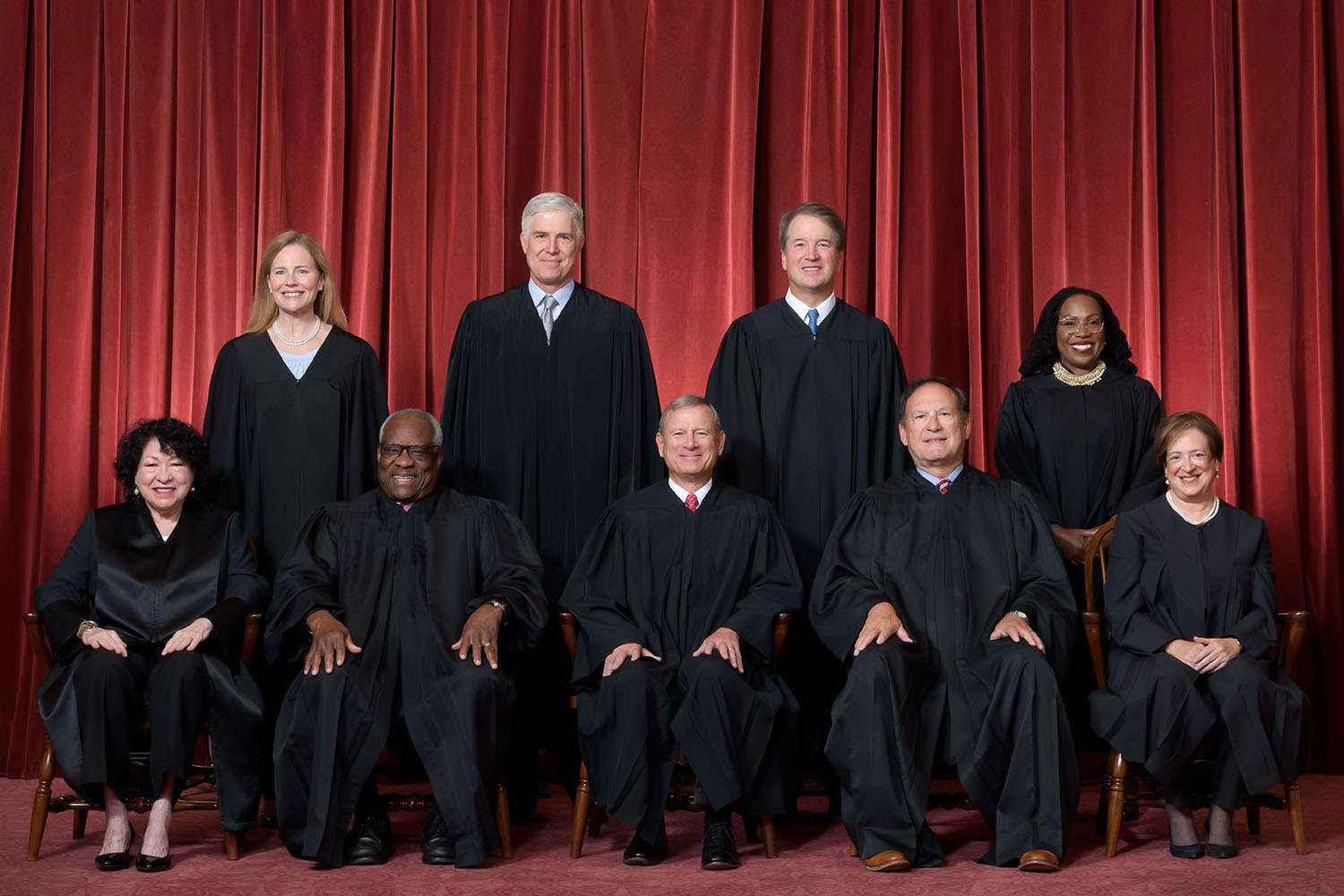
The Supreme Court of the United States handed down a unanimous decision last week that will reverberate through every freight brokerage operation in the country, ruling that federal law does not shield transportation brokers from state-level negligent-hiring lawsuits when the carriers they select cause harm on the road. The opinion in Montgomery v. Caribe Transport II, LLC, authored by Justice Amy Coney Barrett and decided nine to zero on May 14, is eight pages long and contains no dissent, a signal of how clearly the Court read the statutory question before it.
The case traces back to an Illinois highway where truck driver Shawn Montgomery was severely injured, including the amputation of his leg, when a tractor trailer hauling plastic pots veered into his path. The carrier operating that truck, Caribe Transport II, had been hired by C.H. Robinson, the nation’s largest freight broker. At the time of the crash, Caribe Transport carried a conditional safety rating from federal regulators, with documented deficiencies in driver qualifications, hours of service compliance, and crash history, all publicly available through FMCSA’s SAFER database. Montgomery sued C.H. Robinson for negligent hiring, and the broker argued the claim was preempted by the Federal Aviation Administration Authorization Act, the federal statute brokers have relied upon for decades to block such lawsuits.
The Court disagreed, unanimously, finding that the FAAAA’s safety exception preserves states’ authority to regulate safety with respect to motor vehicles, and that a negligent-hiring claim against a broker falls squarely within that exception. The Seventh Circuit’s prior ruling in C.H. Robinson’s favor was reversed, and the case was remanded for proceedings consistent with the opinion.
C.H. Robinson chief legal officer Dorothy Capers responded to the ruling with a statement acknowledging both the human dimension of the case and the company’s commitment to the industry’s safety infrastructure. “Our hearts continue to go out to the victims of truck accidents,” Capers said. “Safety is foundational to who we are, our employees and their families travel these same roads, and our business depends on safe freight delivery. While we are disappointed in the Court’s decision, we will continue to operate responsibly, support stronger federal enforcement, and work constructively with regulators, carriers, and customers to strengthen the national safety system and support safe, reliable transportation across the country.”
The practical implications for brokers extend well beyond C.H. Robinson. For years, federal courts had been split on the question, with the Sixth and Ninth Circuits allowing negligent-hiring claims against brokers to proceed while the Seventh and Eleventh Circuits dismissed them, meaning a broker could face liability for the same carrier selection decision in one jurisdiction and walk away clean in another. That inconsistency is now resolved, and the exposure is uniform and national.
Brandon Wiseman, president of Trucksafe Consulting, offered a measured read of what the ruling does and does not require. “If a broker hires a carrier with obvious safety red flags, it will not get a free pass under FAAAA,” Wiseman said, adding that the opinion does not mean brokers are automatically liable for highway accidents. “It does mean their carrier selection practices are going to matter even more in litigation. There will undoubtedly be a lot of commentary on that topic in the months to come.”
The standard Justice Barrett articulated is ordinary care, not perfection, a distinction the concurring opinion from Justice Kavanaugh, joined by Justice Alito, was careful to reinforce. Brokers who review available safety data, document their vetting decisions, and make reasonable judgments based on that record remain well-positioned to defend claims. The question a court will ask is whether the broker acted reasonably in selecting the carrier, and the answer to that question will increasingly be built in the weeks and months before any accident occurs, not after.
That documentation imperative is driving immediate operational responses across the industry. Janelle Griffith, managing director at Marsh Risk, noted that insurers are already reassessing their exposure. “Insurers are likely to respond by adjusting capacity, attachment points, and underwriting requirements, placing greater emphasis on continuous and demonstrable carrier risk management,” Griffith said, a signal that the financial consequences of inadequate vetting will compound beyond litigation exposure into higher insurance costs and tighter coverage terms for brokers whose carrier qualification processes cannot withstand scrutiny.
For mid-market brokers, the ruling arrives at a consequential moment in the freight cycle. The industry is emerging from one of the longest freight recessions in modern history, a period characterized by rate compression, carrier attrition, and the proliferation of marginal operators surviving on low-scrutiny freight. The same market conditions that eroded carrier quality also eroded the incentive to vet carefully, because in a buyer’s market for capacity, price governed the decision. The Court’s ruling reintroduces a structural cost to that calculus, making carriers with conditional safety ratings and unresolved compliance histories a legal exposure rather than simply a cheaper option.
That shift connects directly to the rate recovery the industry has been anticipating. Analysts broadly expect 2026 to mark an inflection point driven primarily by supply contraction rather than demand growth, as carriers who have been operating at a loss for two and three years exit the market. The ruling accelerates that contraction selectively, applying pressure specifically to the carriers whose safety records make them difficult for any responsible broker to defensibly hire. Carriers with clean CSA scores, strong compliance histories, and documented safety programs become more valuable as operational partners and as legal protection for the brokers who select them, a dynamic that rewards operators who maintained standards through the downcycle.
The ruling also extends its logic beyond licensed brokers. Justice Kavanaugh’s concurrence acknowledged that the opinion’s reasoning applies to anyone in the supply chain who selects a carrier and has access to publicly available safety data showing elevated risk, a category that includes 3PLs, freight forwarders, and digital freight platforms making carrier selection decisions at scale. Shippers who assumed their broker’s preemption defense insulated the broader transaction from negligent-selection liability will need to revisit that assumption.
Not everyone in the industry reads the ruling as a straightforward improvement. Chris Burroughs, president and CEO of the Transportation Intermediaries Association, was direct in his dissent. “We are deeply disappointed with the decision, as the law and legal precedent for decades has given the federal government, not states, the responsibility for setting safety standards for motor carriers. To date, carriers, not brokers, have been responsible for complying with these standards. While brokers are fully committed to safety and to working with federally licensed motor carriers in good standing, the decision imposes an impossible task on brokers — effectively asking them to evaluate the safety of a given motor carrier despite having been deemed safe to operate on public roads by the federal government. This is like asking travel agents to evaluate the safety of a given airline despite the fact that the airline has been licensed to fly by the federal government. Moreover, since brokers do not employ motor carrier drivers directly, they do not have access to the records and data required to perform the safety functions that plaintiff lawyers contend they must.”
What the Court made official last week is something the best operators in this industry already understood: carrier selection is not an administrative function, it is a risk management function, and the brokers who built their networks accordingly are positioned differently than those building that process now.