
Steel Index Reveals a 30% Drop in U.S. Imports

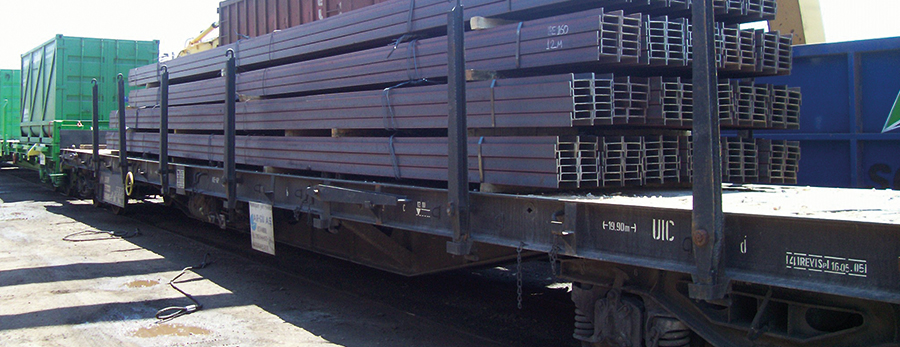
U.S. steel imports fell roughly 30 percent from their January 2025 peak. Domestic hot-rolled coil prices climbed to a two-year high. And the logistics providers moving steel are now operating in an environment where there is, as one executive put it, less margin for disruption than the industry has seen in years.
That is the opening finding of the inaugural TA Steel Transportation and Sustainability Index, released March 4 by TA Services, a Mansfield, Texas-based managed transportation and logistics provider and wholly owned subsidiary of PS Logistics. The Index is designed to give steel producers, service centers, and manufacturers a recurring, data-driven read on the market forces shaping freight strategy across North America.
According to preliminary U.S. Department of Commerce data cited in the Index, steel imports peaked in January 2025 at approximately 2.8 million metric tons before declining steadily throughout the year. By late 2025 and into January 2026, import volumes had fallen to a range of 1.4 to 1.6 million metric tons, a reduction of roughly 30 percent from the peak.
Over the same period, domestic pricing moved in the opposite direction. Hot-rolled coil averaged $975 per short ton as of February 2026, a two-year high. The combination of declining import supply and rising domestic prices is compressing the operating environment for anyone who moves steel for a living.
“The steel market is entering a more disciplined phase where execution matters more than ever,” said Scott Schell, CEO of TA. “As imports moderate and pricing strengthens, supply chains have less margin for disruption.”
In a loose market, a missed pickup or a late delivery is an annoyance. In a tight one, it is a production stoppage, a customer relationship, or a contract. The Index is built around that distinction.
TA’s position is that steel shippers can no longer treat transportation as a commodity input to be optimized on price alone. The firm, which operates across Mexico, the United States, and Canada and offers managed transportation, warehousing, multi-modal brokerage, and cross-border logistics, argues that carrier performance, network reliability, and supply chain risk management are now the variables that determine whether a steel operation gains or loses ground when conditions tighten.
Global regulatory developments, led by the European Union’s Corporate Sustainability Reporting Directive, are accelerating demand for emissions transparency across the supply chain. For U.S.-based steel producers, that pressure is increasingly showing up as requests for transportation-related emissions data as part of Scope 3 disclosures. TA expects that scrutiny to intensify through 2026, alongside verified emissions reporting requirements and continued energy volatility.
The implication for logistics providers is significant. Carriers and 3PLs that cannot provide credible emissions data to their steel customers will find themselves at a disadvantage in procurement conversations, regardless of how competitive their rates are.
The TA Steel Transportation and Sustainability Index is a North America-focused publication that combines trade flow data, pricing benchmarks, transportation performance metrics, and sustainability trends. The inaugural edition, covering conditions through early 2026, is available directly from TA Services. TA Services, Inc. was founded in 1986 and is headquartered in Mansfield, Texas.