
Returns Fraud Costs Retailers more than $125 billion

The 2026 Returns Fraud Report from LiquiDonate reveals the rise of return-related fraud in e-commerce, outlining various fraudulent return mechanisms and their implications for retailers, along with strategies to mitigate such fraud. The report reveals that return-related fraud can cost more than $125 billion per year.
The rapid expansion of online shopping has driven a surge in merchandise returns, creating a meaningful cost burden for retailers across categories. As return rates climb, so does the prevalence of return fraud, compounding the financial strain on retail businesses.
“By adopting smarter, more sustainable return practices, businesses can protect their bottom line while creating a better experience for customers and a positive impact on the environment,” said Disney Petit, CEO and founder of LiquiDonate.
The report findings examine the primary types of return-related fraud, how these schemes occur, the magnitude of the issue, and their impact on retail operations and reverse logistics. The report also offers strategies to curb fraudulent returns while repositioning returns as an opportunity to strengthen competitiveness and advance sustainability goals. Key findings include:
Major Types of Returns Fraud
- Chargebacks: Consumers dispute legitimate transactions to obtain refunds while retaining purchased items, bypassing retailer processes.
- Wardrobing: Temporary use of items followed by returns, common in apparel and fashion sectors.
- Counterfeiting: Fraudsters return counterfeit items in place of genuine products.
- Item Substitution and Empty-Box Returns: Fraudsters return incorrect items, empty boxes, or gutted products.
- Keep-it Fraud: Abuse of policies where customers receive refunds without returning low-value items.
- Bracketing: Purchasing multiple versions of an item and returning those that don’t meet expectations, increasing operational costs.
- Return-as-a-Service (RaaS): Organized crime groups manipulate return systems for profit.
Scale of the Problem
- Retailers estimate that 15% of all returns are fraudulent, contributing to significant financial losses.
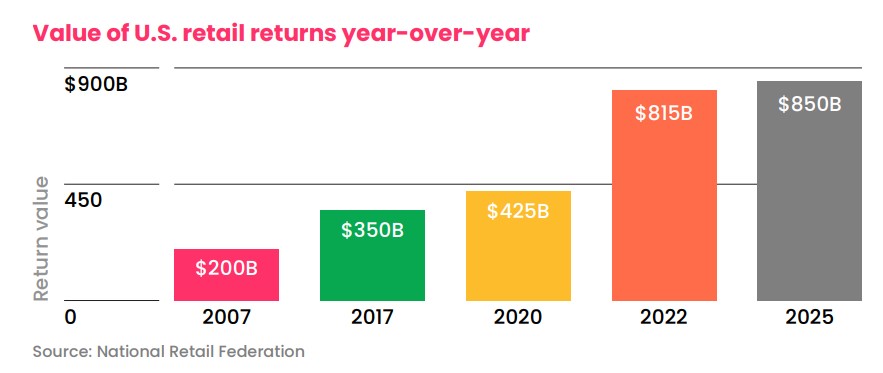
- Total retail returns reached $850 billion in 2025, with online return rates at 24.5%, compared to 8.9% for in-store purchases.
- Fraudulent returns amplify costs, with average return costs ranging from $25 to $30 per item.
- More than 1 in 3 consumers admit to committing at least one form of return-related fraud.
- 85% of retailers surveyed by LiquiDonate have experienced some form of return fraud
“Returns fraud is a significant challenge for retailers, particularly in e-commerce,” said Petit. “Our hope with this report is to help retailers understand that they have options when it comes to return fraud. Technology can help.”
The report concludes that return fraud is no longer a marginal issue but rather a growing risk embedded across the retail value chain. Retailers operating on thin margins must rethink how returns are handled, verified, and routed. Retailers that invest in modern return infrastructure today will be better positioned to strengthen trust, improve operational efficiency, and meet rising consumer expectations around sustainability.
To explore the complete findings and insights, read the 2026 Returns Fraud Report here.