
Court Finds Trump’s IEEPA Tariffs Unlawful, Orders a Pathway to Refunds

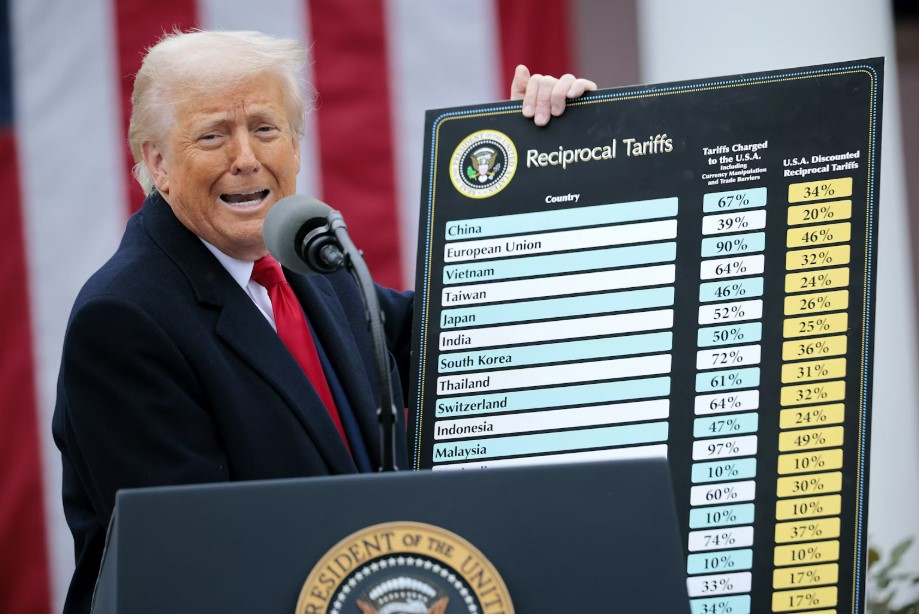
The Court of International Trade issued a ruling last week in Atmus Filtration Inc. versus the United States, directing U.S. Customs and Border Protection to liquidate or reliquidate import entries without regard to IEEPA duties, resulting in refunds for importers who had been paying tariffs the Supreme Court deemed unlawful.
The ruling followed the Supreme Court’s consolidated decisions in Trump v. V.O.S. Selections and Learning Resources v. Trump, which rejected IEEPA as a tariff authority on both statutory and separation-of-powers grounds. In a research note published 6 March 2026, Gartner analysts Brian Whitlock and Cori Masters called the CIT ruling a best-case scenario for importers: CBP is ordered to correct entries directly, removing unlawful IEEPA Harmonized System codes and triggering refunds where duty has already been paid. No individual action required.
“This is a best-case scenario for importers because it does not require importers to take any action to receive refunds,” wrote Cori Masters, Senior Director Analyst, Gartner.
Federal Express filed suit at the CIT on February 23, 2026 — just three days after the Supreme Court decision — making it the first major U.S. corporation to pursue IEEPA refunds. The complaint states plainly that FedEx seeks “a full refund from Defendants of all IEEPA duties Plaintiffs have paid to the United States.” The dollar figure was not disclosed, but FedEx’s CFO John Dietrich had earlier cited a $300 million trade-related headwind for fiscal year 2026. FedEx publicly pledged to pass any refunds through to the shippers and consumers who originally bore the charges. Consumer class actions followed within days anyway, including a suit filed by Morgan & Morgan on behalf of a Miami customer charged $36 in tariff-related fees on tennis shoes.
The wave that followed FedEx was broad and fast. Costco filed in December 2025, well before the ruling, to preserve its refund rights. After February 20, Hasbro, Nintendo, L’Oréal, Dyson, Bausch + Lomb, CVS, GoPro, Toyota, and more than 2,000 others filed actions at the CIT. All have been assigned to a single judge: Richard K. Eaton, whose March 4 order in the Atmus case made clear the ruling applies universally. His words from the bench were unambiguous: “The Supreme Court has told us that the collection of these duties was unlawful from the first moment they were imposed. All of this money was collected unlawfully and must go back to the importers.”
CBP filed a declaration requesting a 45-day extension to build an automated refund mechanism, citing a staggering operational scope: 53 million entries, 1.7 billion entry summary lines, and an estimated 4.4 million man-hours of processing. Only 6% of the 330,000 affected importers have completed the ACH setup required for electronic refunds. The refund total across all IEEPA collections is now estimated at $166 billion, with the government also on the hook for interest that the Cato Institute estimates at $700 million per month of delay.
The administration has signaled it will contest the refund process aggressively. Treasury Secretary Scott Bessent called the refunds “the ultimate corporate welfare.” The DOJ argued at the Atmus hearing that each importer must file an individual claim. Judge Eaton rejected that position, but the government is expected to appeal to the Federal Circuit, and trade attorneys warn the process could extend well into the next presidential term.
Sam Agyemang, VP of Business Development and Sales at ITF Group, works directly with shippers navigating cost, routing, and capacity decisions in real time. His read on the ruling does not mince words.
“Trade policy is a lever. Supply chains are the gears. When the lever gets yanked back, you find out who built a gearbox and who built a wish,” said Agyemang.
ITF Group is an asset-backed 3PL whose clients across manufacturing, retail, and distribution are directly exposed to shifting import costs and routing disruptions. Agyemang’s broader point is one the legal briefs do not capture: a court order is a legal instrument, not a supply chain plan. Companies that built pricing and routing assumptions around tariff certainty are now navigating a second round of disruption, this time in reverse.
“The Court basically reminded the market that tariffs aren’t a ‘copy/paste’ job. If rules change overnight, supply chains pay the bill. Shippers need pricing and routing plans that assume volatility, not certainty,” he continued.
Gartner’s research note, authored by Whitlock and Masters, recommends engaging legal counsel and CFO-level finance teams immediately to assess all entries for refund eligibility, with priority on entries still within the 180-day protest window. Importers should monitor CBP’s Cargo Selective Messaging System for implementation orders, secure contractual pass-through rights if they are not the importer of record, and model cash flow impacts accounting for potential interest income. The full Gartner research note is available to subscribers. The consensus from trade counsel is consistent with Gartner’s framework: the legal question is resolved, but the path to an actual check requires companies to move now, not wait for the government to find them.