

China’s Softer Tone on Rare Earths Does Not Change U.S. Dependence

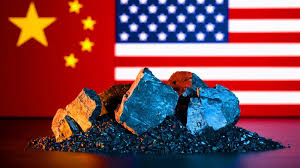
In May, China told the United States that its rare earth export controls are lawful and that it would address what it considers reasonable concerns about critical mineral access. The statement from China’s Ministry of Commerce, reported by Reuters, followed bilateral discussions over shortages of yttrium, scandium, and other elements that go into defense systems, semiconductors, aerospace components, and the data center buildout behind artificial intelligence. The conciliatory language eased some immediate worry about supply, and it also confirmed how little has changed in the underlying balance of power.
China refines and processes the large majority of the world’s rare earths, and it converts them into the metals and magnets that finished products require. That position gives Beijing leverage that a willingness to talk does not erase. The pressure is most acute for the defense sector, where a federal rule takes effect on January 1, 2027, barring the Pentagon from buying samarium-cobalt and neodymium magnets, tantalum, and tungsten if any stage of their production, from mining through melting, took place in China, Russia, Iran, or North Korea. Defense contractors including Lockheed Martin and Northrop Grumman are already working to trace magnet origins down to the mine and to qualify suppliers outside China.
One domestic effort to narrow that dependence pairs U.S. Critical Materials and Idaho National Laboratory, which have partnered under a Phase II Cooperative Research and Development Agreement to build a pilot-scale processing plant on the laboratory’s campus, designed to run one to two tons of ore a day from the company’s Sheep Creek deposit in southwest Montana. The deposit carries neodymium, praseodymium, samarium, scandium, niobium, and heavy rare earths such as dysprosium, terbium, and yttrium, along with high-grade gallium that the partners plan to process first because of its national security uses.
“Rare earths, gallium, and scandium are rapidly moving from niche inputs to central pillars of global technology development,” said Harvey Kaye, executive chairman of U.S. Critical Materials. “As AI technologies advance, the importance of materials like gallium is becoming increasingly clear: next-generation chips, data infrastructure, and advanced systems all depend on consistent access to high-quality primary resources rather than relying solely on recycled supply.”
A plant processing one to two tons a day is a research effort rather than a commercial supply, and the United States still imports roughly ten thousand tons of rare earth magnets from China each year. Analysts who follow the sector estimate that building a full domestic chain from mining through metallization will take the better part of a decade. Sheep Creek and projects like it are early steps in a chain that has to start somewhere, and the January 2027 deadline arrives whether or not the capacity is ready. For now, the United States is negotiating from a position it has spent years trying to leave, and China’s willingness to keep talking is a reminder of who still sets the terms.
Sources