
Carriers Suspend Strait of Hormuz Transits as Middle East Conflict Escalates

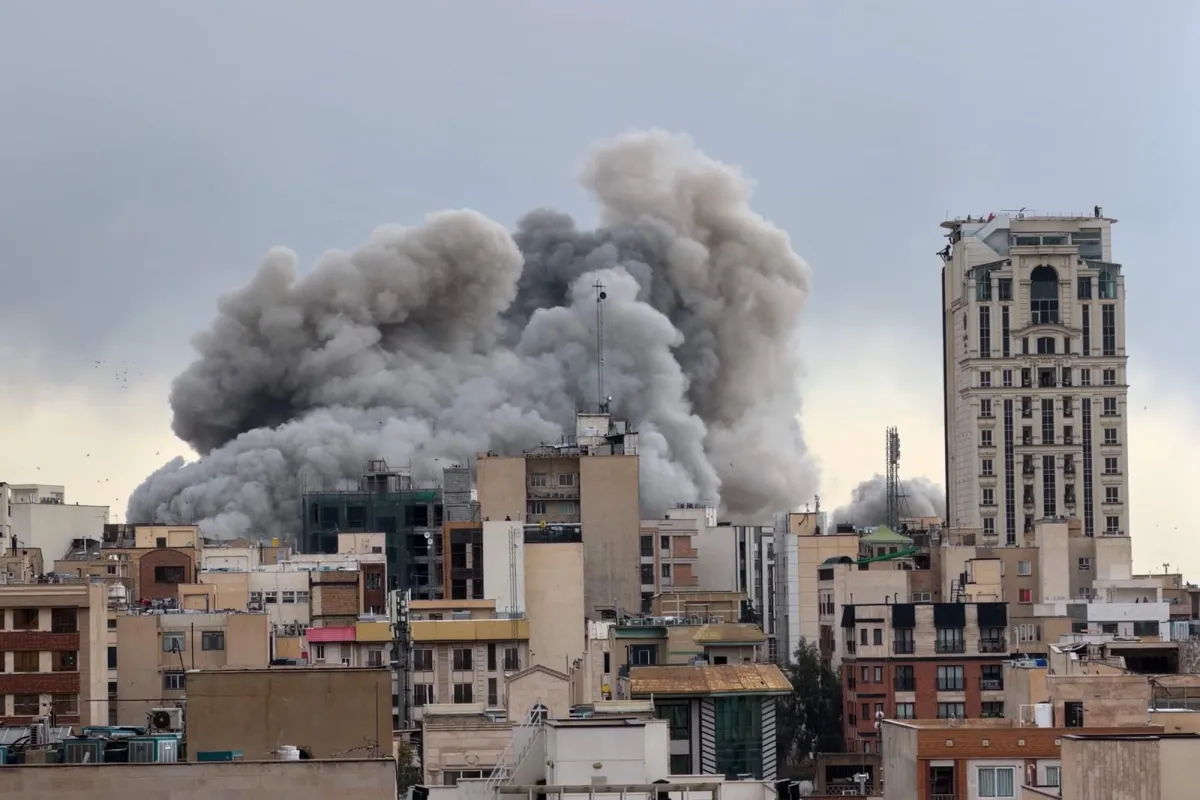
Global container shipping lines are halting transits through the Strait of Hormuz after U.S. and Israeli strikes on Iran intensified fears of a broader regional conflict and prolonged disruption to key maritime corridors.
The escalation has heightened concerns over trade flows through the Gulf and the adjacent Bab el-Mandeb Strait, both critical arteries for global energy and containerized cargo.
Maersk confirmed it has suspended all vessel crossings in the Strait of Hormuz “until further notice,” warning that services calling ports in the Persian Gulf may face delays. Sailings on its Middle East–India to Mediterranean and Middle East–India to U.S. East Coast loops are being diverted around the Cape of Good Hope — a significantly longer and more expensive routing.
Peter Sand, chief analyst at Xeneta, said shippers should prepare for elevated rates in the region for as long as instability persists.
“The risk of geopolitics has shown its ugly face with higher frequency and more severity over the past years than ever before,” Sand told CNBC’s “Squawk Box Europe” on Monday.
“I think it’s fair also to say there is a little bit of fatigue also in the industry because you draw 10 contingency plans only to tear them all up because there is a new twist and a new angle to it.”
Speaking Monday at the TPM26 conference in Long Beach, executives warned that the effective closure of the Strait to container vessels could have sweeping, long-term consequences for global trade networks.
Jeremy Nixon, CEO of Ocean Network Express (ONE), described the situation as one of the most severe risk scenarios carriers had contemplated.
“What’s transpiring is really the worst end of the spectrum in terms of the potential risk outlook that we thought may happen,” Nixon said.
“About 10% of the global fleet is caught up in this. This is a major development. This is another black swan event. We continue to go through these in our industry, and this one is an evolving story. It’s a breaking live news situation, changing by the hour.”
According to Nixon, “The immediate implications are that insurance has come off so you can’t put any ships through, fuel prices are rapidly escalating, and most of the carriers, including ONE, have stopped all bookings to the Middle East.”
Other major carriers are following suit.
Hapag-Lloyd said it has suspended all vessels transiting the Strait, citing crew safety and security concerns. Meanwhile, MSC, the world’s largest container shipping line, ordered vessels operating in the Gulf region to proceed to designated safe areas while monitoring developments.
Even a temporary blockage for oil tankers could ripple through energy markets, further inflating bunker costs and overall freight rates.
Beyond energy flows, the Strait of Hormuz underpins global container networks. Regional hubs such as Jebel Ali Port and Khor Fakkan Port function as major transshipment nodes, connecting Asia, Europe and North America trades.
With bookings halted and vessels idled or rerouted, operational strain is mounting across interconnected liner networks.
Johan Sigsgaard, executive vice president at Maersk, warned that the immediate challenge lies in managing cargo already afloat.
“In the short run, the containers that are already on the water, the bookings that have already been made that are on the water – just dealing with that is going to be an issue,” Sigsgaard said.
“Because today, in the global hubs, we don’t have the capacity for the kind of volume we’re talking about here. This is a massive volume. This is going to have an impact.”
He added that global trade lanes are deeply intertwined.
“When these problems occur, what we have seen from the past couple of years is that it’s the same equipment that’s used worldwide, the same ships largely being used worldwide. Many of the hubs today touch almost all trades, particularly the big hubs,” said Sigsgaard.
“This means, depending on how long this lasts, the effects will eventually be felt in more trades.”
According to Turloch Mooney, global head of port analytics at S&P Global Market Intelligence, the fallout for ports is already severe.
“From the ports’ perspective, it is completely catastrophic. I don’t think catastrophic is too big a word to describe it,” Mooney said.
“We’re already seeing a huge amount of disruption and congestion at the South Asian ports — Mundra, Mumbai, Colombo — because a lot of the cargo destined for Middle East ports like Jebel Ali, which is completely non-operational, have been diverted to those routes for cargo to be delivered over land.”
Mooney explained that vessels are currently stalled on both sides of the Strait due to insurance and safety constraints.
“Once a safe window opens and those vessels start to move, they’re all going to be reaching their destinations practically simultaneously, which will clearly overwhelm port operations.”
“Even if the conflict were to end tomorrow, it would probably be at least six months before we’re back to normality, given what’s happened already,” Mooney warned.
For global supply chains already strained by years of geopolitical shocks — from pandemic disruptions to Red Sea security threats — the Strait of Hormuz shutdown represents yet another systemic test. And as carrier executives emphasized this week, its impact is unlikely to remain confined to the Middle East.