
As Hormuz Pressure Mounts, Supply Chain Technology Pivots Toward Continuous Intelligence

The global supply chain technology sector is responding to geopolitical pressure with a new generation of platforms built not for periodic optimization but for real-time adaptation, and the companies making the most credible case for that shift are not only the software vendors. The 4PLs are building the argument from data.
Redwood Logistics, one of North America’s leading modern fourth-party logistics providers, released its inaugural AI in Logistics Report in May, drawing on original research from its Customer Advisory Board. The findings are pointed: 40 percent of transportation organizations have not yet launched a single AI pilot, and of the companies that have, only 13 percent are generating quantifiable results. The gap between where the industry is directing capital and where it is seeing returns, Redwood’s research concludes, is not a technology problem. It is a foundation problem.
“The organizations generating returns from AI are not necessarily the ones with the most software,” said Michael Reed, Chief Product Officer at Redwood. “The companies succeeding are the ones that built the right conditions first.”
Those conditions, in Redwood’s framework, span four pillars: organizational structure, data foundation, technology architecture, and change management and governance. The research found that 35 percent of transportation leaders cite data quality and availability as the single largest barrier to AI value, with another 28 percent pointing to integration gaps across TMS, ERP, and planning tools. Together those two obstacles account for the majority of what is keeping logistics organizations in manual exception management despite years of technology investment.
“Data and integration challenges are not new. What is new is that they have become AI-blockers,” said Eric Rempel, Chief Innovation Officer, Redwood Logistics. “The organizations that have already solved that problem, whether through years of internal investment or through a 4PL with purpose-built integration infrastructure, are positioned to put AI to work today.
“The ones that have not are going to keep producing pilots that never compound into results. That is the problem this report is designed to help logistics leaders diagnose.”
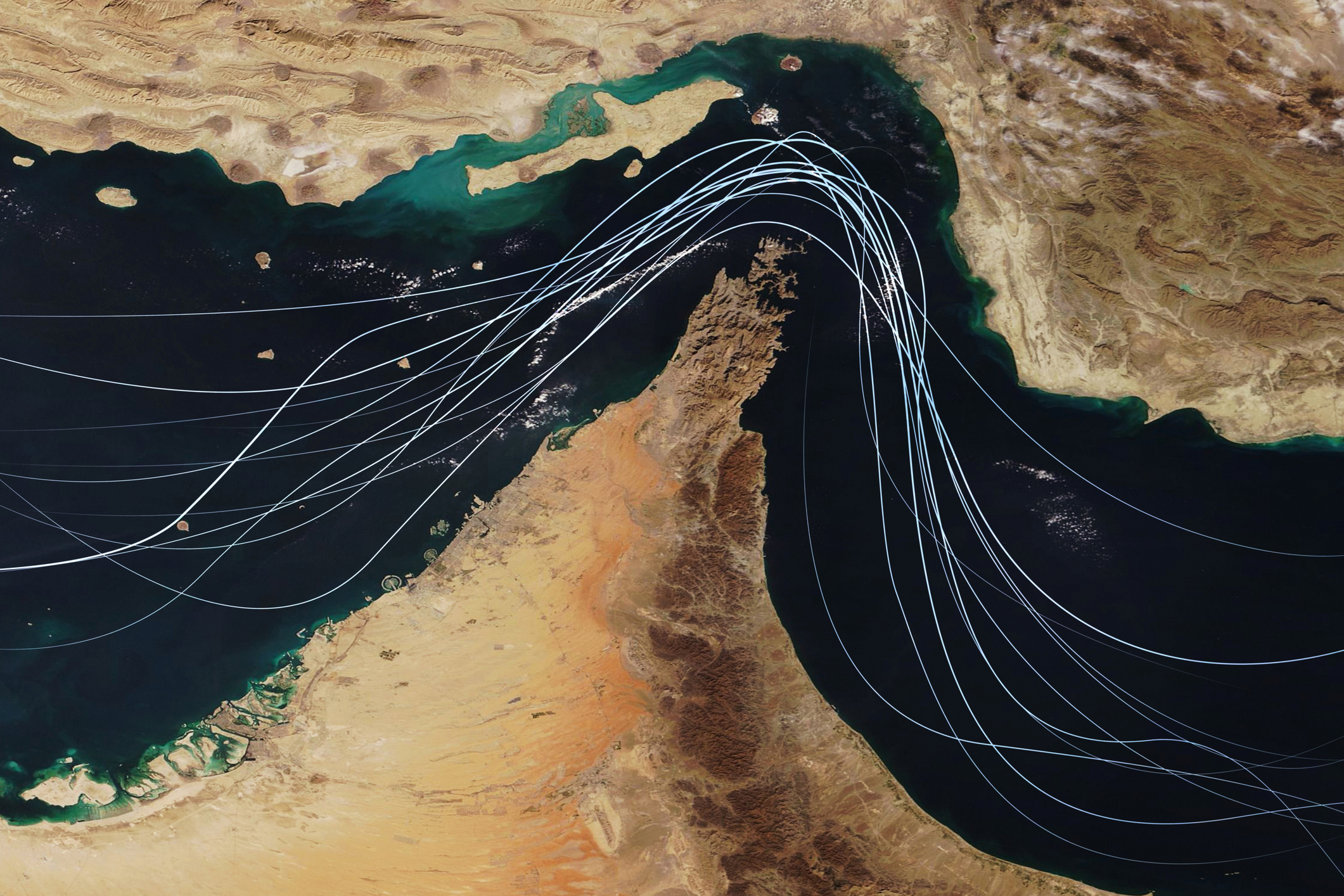
The timing of the research matters. Tensions surrounding the Strait of Hormuz, through which roughly a fifth of the world’s oil passes and which serves as a critical chokepoint for global container and tanker traffic, have reintroduced a category of supply chain risk that many enterprises had treated as manageable background noise. When that waterway tightens, the cascading effects move fast. Ocean freight rates climb, fuel surcharges follow, and companies relying on planning cycles measured in weeks find themselves operating on data that is already outdated by the time decisions are made.
That is the environment into which 4flow, the Berlin-based fourth-party logistics provider and supply chain software developer, launched optaire at the Gartner Supply Chain Symposium in Orlando earlier this month. The platform is built to move supply chain decision-making from cycle-based planning toward continuous detection, modeling, and execution, running from a shared data architecture that gives the full system a single consistent view across logistics, network design, and risk management.
“Leaders can’t afford to wait for the next planning cycle when disruption is happening now,” said Natalia Andreyeva, Vice President of 4flow. The platform is modular by design and positions itself as a layer that activates existing ERP, TMS, and WMS infrastructure rather than replacing it.
What connects optaire’s launch and Redwood’s research is the same underlying argument, made from different angles. The 4PLs that are positioned to move in a Hormuz moment are not the ones with the most software licenses. They are the ones that have already solved the integration and data foundation problem, whether through years of internal investment or through purpose-built infrastructure. As Eric Rempel, Chief Innovation Officer at Redwood, put it: organizations that have not solved that problem are going to keep producing pilots that never compound into results.
For shippers evaluating their exposure, both companies are pointing toward the same diagnostic question. Not whether AI is in the budget, but whether the conditions exist to put it to work when disruption demands it.