
Air Bridges, Waived Tolls and a Shuttered Port: Logistics Answers Colombia’s Earthquake

A Boeing 737 freighter landed at El Edén International Airport in Armenia, Colombia, on Saturday, the first aircraft of its type to work bulk cargo at the field. The aircraft was ferried from São Paulo because its performance envelope fit El Edén’s runway, then flew two rotations out of Bogotá carrying more than 40 tons of hygiene supplies, food, water, medical kits, warm clothing and pet food into the Eje Cafetero.
GOLLOG and Avianca Cargo, the freight arms of Abra Group’s two airlines, ran the operation jointly, coordinating with the Colombian Association of Food Banks (ABACO), the TAAP Foundation, Bogotá’s Mayor’s Office and the National Army. Loads went to Caicedonia, El Cairo and Quimbaya, plus the Armenia Food Bank and the Unified Command Post collection center. María del Mar Whittaker, Abra Group’s chief corporate responsibility officer, called reaching the coffee-growing region “a major logistical challenge.”
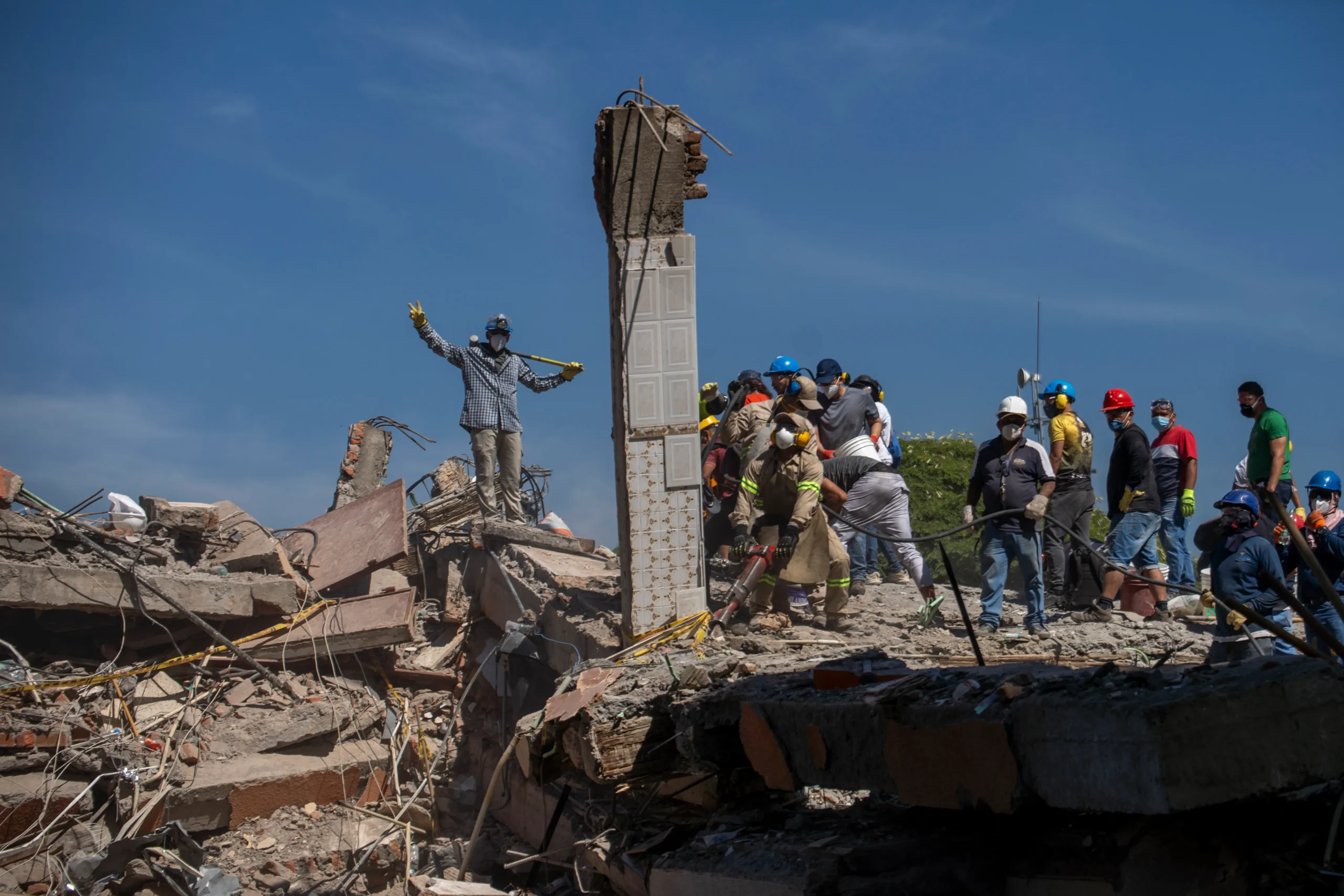
The difficulty is the point. The magnitude 7.4 earthquake that struck Chocó department on Aug. 10 killed at least 273 people and injured more than 3,800, with 377 still missing as of the government’s Aug. 13 count and later tallies running higher. It also damaged the road, port and airport infrastructure that any relief operation has to use.
Avianca Cargo has moved the most volume. The carrier flew more than 150 tons in the first two days of the emergency, then added 60 tons from Miami to Cali aboard an A330F on Aug. 14, nine tons of it coordinated by the Colombian government and 51 donated by Global Empowerment Mission. It was the airline’s fourth shipment since the quake, and officials said further supplies will move on scheduled commercial flights rather than dedicated freighters. GEM, working with Solidaridad por Colombia, is standing up regional logistics hubs in Medellín, Pereira and Cali, retaining control of warehousing, inventory and distribution rather than handing off to government channels.
Smaller operators are covering what large aircraft cannot reach. Airline Alma Air, air-ambulance operator Ambulancias Aéreas de Colombia and fuel distributor Terpel assigned a Cessna Grand Caravan at no cost to move medicine, supplies and health personnel, and agreed to keep the aircraft on standby for the Health Ministry and relief organizations rather than flying one mission and standing down. U.S. Air Force C-17s began arriving in Bogotá and Medellín on Aug. 14 under a State Department-led humanitarian assistance program.
Trucking’s contribution came in the form of absorbed cost. Fedetranscarga, Colombia’s cargo transport employers’ federation, said it would cover every expense tied to hauling humanitarian aid, including freight rates, fuel, tolls and driver wages, and put member fleets at the disposal of the response. Tractor-trailers were already moving toward the hardest-hit areas when the federation announced the policy. Federation president Arnulfo Cuervo Aguilera described the sector’s role as “not only to move the economy, but to connect hearts in moments of crisis.”
Government policy followed. The National Infrastructure Agency (ANI) directed concessionaires to waive tolls for heavy machinery, equipment and humanitarian loads, on the condition that carriers coordinate in advance with the agencies managing the response. That condition matters operationally, because drivers hauling donations on their own initiative cannot assume free passage. The largest ground movement to date reached Chocó on Aug. 15, a 21-truck caravan carrying more than 170 tons organized under the First Lady’s “Colombia, un solo corazón” campaign, with Coordinadora, Servientrega, Envía, LATAM Airlines Colombia, Bavaria, Coca-Cola, Grupo Olímpica, D1 and Tiendas Ara participating and the National Army escorting the convoy.
All of it is running on damaged infrastructure. At Buenaventura, the country’s principal Pacific gateway, container terminal TCBuen suspended operations while it drafted a recovery plan, and the quake shifted container stacks in the yard at Aguadulce, forcing crews to reposition and secure boxes under gate restrictions. Sociedad Portuaria Regional de Buenaventura reported containership and roro work running normally after engineering inspections, with other cargo activity returning progressively.
Access to the docks proved the harder problem. ANI reported landslides and damage at multiple points along the Buga–Buenaventura corridor, where three road-project workers were killed, and the Cajamarca–Calarcá route closed as well, taking two major freight arteries out of service at the same time. Asoexport president Gustavo Gómez told business daily La República that coffee export operations were “paralysed” by road closures, power outages, truck shortages and terminal restrictions combined. The association estimates each day of disruption holds back more than 30,000 bags, roughly 2,000 tonnes. Buenaventura handles more than 60% of Colombia’s coffee exports, and a large share of the country’s processing capacity sits in Manizales, Pereira, Armenia and Cartago, so coffee can be milled and ready to ship while remaining stranded upstream of the port.
Shipments partially resumed by Aug. 13, though traffic remains intermittent. Exporters in Huila, Tolima, Cauca and Nariño, well outside the damage zone, are struggling to source trucks to reroute through Cartagena, Santa Marta and Puerto Antioquia, where contingency plans are being drawn up to add shipping capacity. A full reopening will not clear the problem immediately, since accumulated inland cargo will move toward Buenaventura at once, producing truck queues, terminal congestion and an export backlog. Colombia ships roughly 13 million 60-kg bags annually, with the U.S. its largest destination by volume. On the air side, Pereira’s Matecaña airport remains closed to commercial traffic, while El Edén, Quibdó, Manizales and Buenaventura operate with limited capacity.
The response assembled quickly in part because the same companies ran a version of it in June. After Venezuela’s June 24 earthquakes, Amazon Air, DHL, LATAM Cargo, FedEx, Avianca Cargo, Atlas Air, Abra Group, DSV, GOL, DP World and Air Charter Service all moved relief cargo. Amazon Air Cargo’s seven-flight-per-week Miami–Caracas air bridge was matched through Airlink, the nonprofit that pairs humanitarian requests with airline capacity, and DHL deployed its Disaster Response Team to coordinate aid movement across the Americas. Airlink is deploying nonprofit partners into Colombia now.
For companies weighing donations in kind, one point from that response carries over. Direct Relief has warned that damaged airports, roads and warehouses create severe bottlenecks after a disaster, and that unrequested goods consume the transportation, storage and staff capacity that requested aid needs. In Colombia at the moment, that capacity, rather than willingness to donate it, is the binding constraint.
How to help: Airlink, a nonprofit that moves humanitarian cargo and relief personnel using donated airline capacity, is coordinating its Colombia earthquake response with in-country partners. Supply Chain Moves does not endorse specific organizations and receives no compensation for this listing.